
What We Reach For, and Why
On Tools, Bias, and the Art of Discernment


In a folktale, a carpenter’s apprentice is sent out into the world with a single tool, a hammer, and the instruction to help wherever he can.
He’s earnest. Skilled. Intent on doing good.
The first door he finds has a loose hinge. He fixes it. The second needs a new frame, he does that too. The third house has a cracked window, but he can’t help himself: he nails it shut. Over time, he becomes known as the one who “fixes” things. Even when there’s nothing broken, people offer him things to repair.
Eventually, the apprentice stops looking at what a place needs. He starts looking for what he can hit.
We’ve been thinking lately about the tools we reach for.
In times of urgency, complexity, or discomfort, it’s human to default to what we know. To the hammer already in our hand.
It’s a pattern well captured by what psychologist Abraham Maslow famously observed: “If the only tool you have is a hammer, it is tempting to treat everything as if it were a nail.” Philosopher Abraham Kaplan later expanded this into what’s now called the law of the instrument, the tendency to lean too heavily on familiar methods, even when they’re not suited to the situation.
In our work across systems, sectors, and scales, we see this all the time.
A funding bottleneck arises, and we double down on efficiency metrics.
A conflict emerges in a collaborative, and we reach for structure.
Uncertainty enters a project, and we respond with speed, outputs, solutions.
Sometimes, these are exactly the right responses. But sometimes they aren’t. And the more we rely on them, the less we tend to notice when they stop working.
The hammer, reimagined
At Helm, we often work with methods that prioritise dialogue, emergence, and holding complexity. And yet we’ve caught ourselves applying these methods too broadly, even where they don’t belong. The circle, for instance, is a powerful tool, but it’s not always what’s needed. Not all systems are ready for shared reflection. Not all conversations benefit from slowness. Not every room can, or should, be equalised.
The same is true for AI, scale, data, and dashboards. These aren’t inherently flawed. But when we start assuming they are inherently right, they begin to obscure more than they reveal. What gets lost is discretion, context, and the ability to see problems on their own terms.
In systems work, the hammer is rarely just a methodology. Often, it is our bias. The invisible lens through which we evaluate what’s happening, decide what’s possible, and determine what’s worth doing. Sometimes our hammer is our belief in collaboration. Sometimes it’s control. Sometimes it’s a conviction that we must move fast. Sometimes it’s the comfort of slowness.
Each of these, in the right place, can be generative. But misapplied, even the best-intentioned tool becomes a limitation.
The seduction of familiarity
The deeper challenge is that our tools are not neutral. They shape how we see. The more often we use a hammer, the more the world begins to organise itself around what hammers can fix. Everything else starts to feel irrelevant, or worse, invisible.
This isn’t just about tools. It’s about orientation. Once we have a frame in place, we start to protect it. We filter what we notice. We organise our resources, our language, even our sense of urgency around it. And slowly, without realising it, we stop choosing our tools, we start being chosen by them.
This is the quiet creep of instrumentalism. And in moments of crisis, complexity, or transition, it becomes especially seductive. Because when things feel uncertain, it’s comforting to have something, anything, to hold onto.
What helps us see differently?
It takes work to zoom out far enough to see the shape of our own hammer. To notice not just the tool in our hand, but the assumptions beneath it.
Some prompts we’ve been sitting with:
What patterns do we repeat, not because they work, but because they’re familiar?
Where are we applying tools designed for stability in contexts that demand emergence?
What lenses are we wearing when we look at the system, and what are they filtering out?
We find that a systems lens helps here. Not because it offers “answers,” but because it reminds us that all tools are contextual. What worked in one phase of a project may not work in another. What worked in one organisation may not work across a sector. What works in the system is not always what works on the system.
Being method-agnostic is not the same as being adrift. It means staying committed to purpose, not prescription. Principles, not patterns. It means being willing to learn and unlearn continuously.
The brain, too, is a system
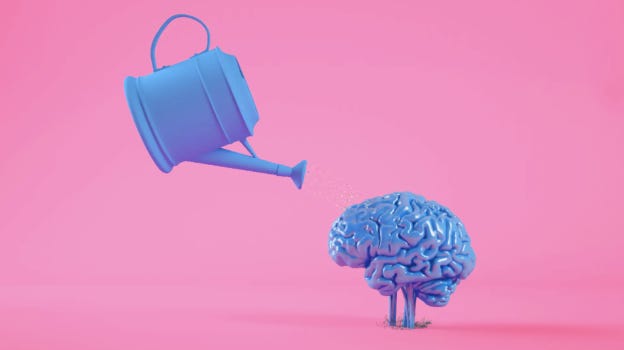
One of the more generous insights from neuroscience is the idea of neuroplasticity, that our brains are not fixed, but continuously reshaping themselves based on experience, attention, and use. The same is true of collectives. Organisations. Coalitions. Systems.
We are not trapped in our defaults. The patterns we hold onto can be released. The tools we’ve built can be redesigned. And the ways we’ve come to see can be expanded, disrupted, or replaced entirely, if we’re willing to look.
There is no perfect toolkit. But there is a discipline of discernment. A willingness to pause and ask: What is really needed here?
And what might become possible if we stopped reaching for the hammer?
The folktale never tells us what happened to the apprentice.
But maybe there’s a version where he pauses one day, looks down at the hammer in his hand, and sets it gently aside.
Maybe he listens.
Maybe the next door he walks through doesn’t need fixing, but something else entirely.
Curious about how this shows up in your organisation or ecosystem?
We’re holding space for a small number of workshops exploring toolsets, mental models, and ways of seeing. If you’re interested, fill out this simple form and we’ll be in touch.
https://forms.gle/ECzjJCTr5Jd3sKBm8 - We’re holding space for a small number of workshops exploring toolsets, mental models, and ways of seeing. If you’re interested, fill out this simple form and we’ll be in touch.